Ongoing research · 2026–present
When one robot stops
When a robot brakes at a crossing, the robots behind it may lose time even when every controller responds correctly. This ongoing study asks when those small delays begin to limit the work a fleet can finish.
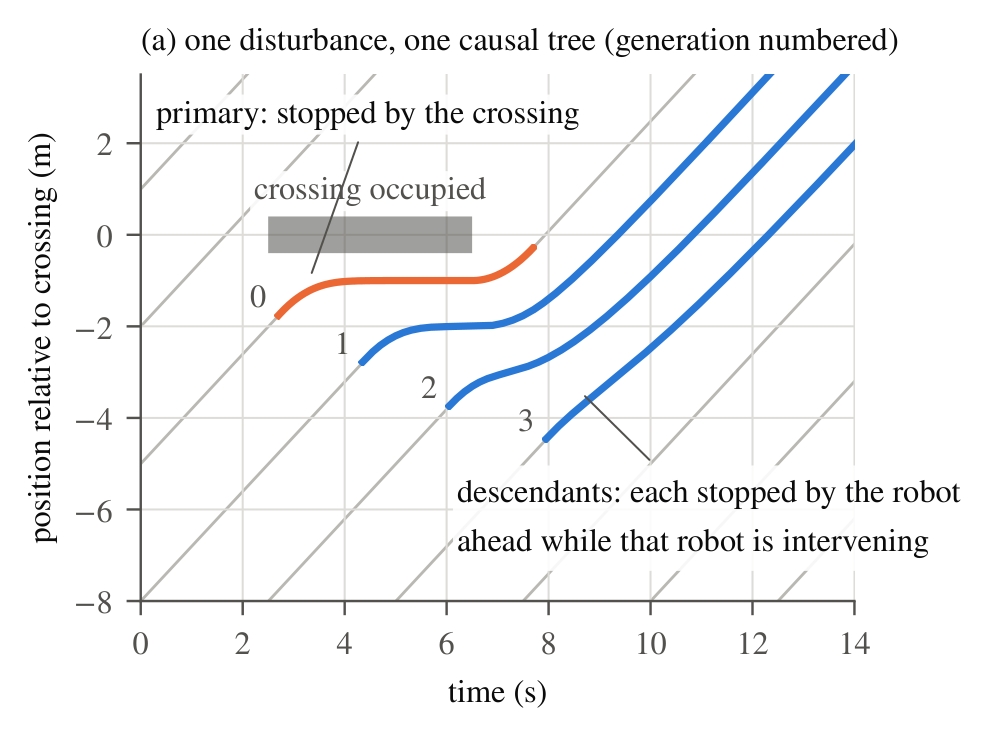
Tracing a single stop
Two simulated fleets receive the same jobs. A disturbance triggers a stop in one run. Comparing the waiting times reveals which robots lost time beyond the first stop.
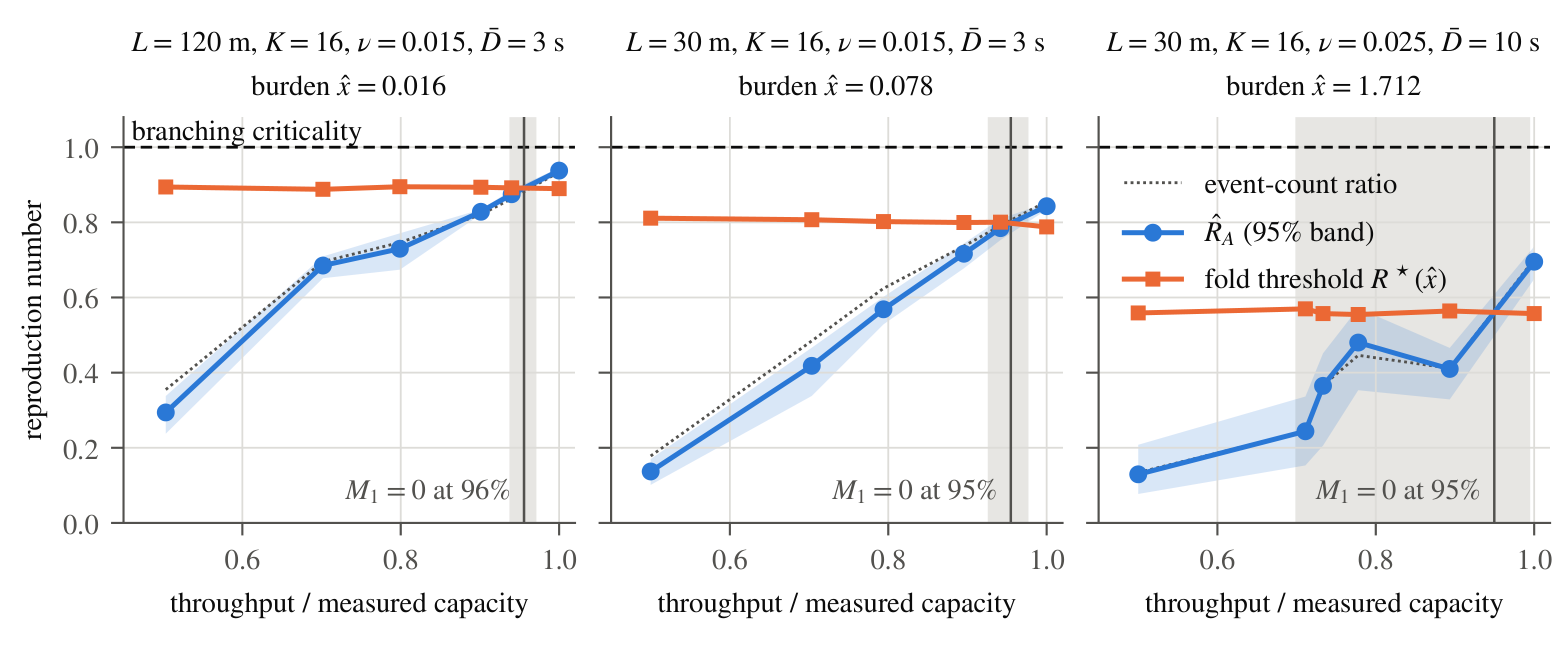
Measuring the cost
The simulation increases the job arrival rate and counts completed jobs per hour. The current question is whether patterns of stops can warn that a corridor is approaching its capacity.
All projects
Related case studyA route a TurtleBot can actually drive
Look at the wheel commands that determine one robot’s motion.